Fire-Retardant Doors vs Standard Doors: Key Differences Explained

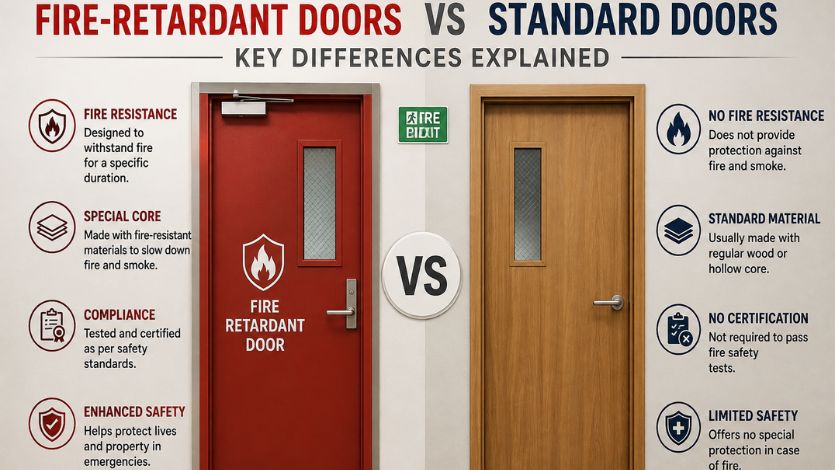
The safety and functionality of the door are important. Standard doors are engineered primarily for access, security and privacy, whereas Fire Retardant Doors are engineered primarily to offer further protection in the event of a fire. The distinction between these two types of doors assists us to choose appropriate solutions for residential, commercial and industrial applications.
Fire Retardant Doors: What are They?
Fire Retardant Doors are specially designed doors which are capable of slowing the spread of fire, heat and smoke for a period of time. They are usually installed in structural components where fire protection is a crucial concern, including stairs, electrical rooms, hospitals, hotels, schools, factories, and commercial buildings.
The doors are made with special materials and are engineered to retain their structural strength during high temperatures. Fire doors can have various levels of fire resistance depending on the product and the need of the project.
What are Standard Doors?
Typical doors are used for normal daily purposes. They are used primarily for privacy, space, security and to improve the interior look.
They may be constructed from plywood, solid wood, MDF, engineered wood or other door constructions. Typical doors are strong and durable, but are not designed or tested to offer a specified degree of fire resistance.
It's important to know the differences between fire-rated doors and regular doors. There are a few key differences between fire-rated doors and regular doors.
1. Fire Resistance
The most significant difference is in fire performance. Fire Retardant Doors are intended to provide resistance to flame, while ordinary doors can warp, lose strength or even burn under extreme heat.
2. Construction
Fire rated doors are treated with a special material and constructed in a special way to make them more resistant to fire. The focus of standard doors is more on their looks, durability, and performance during the day.
3. Door Components
A fire-rated door is one component of an overall system. Other elements, such as the frame, hinges, closers, locks and seals can be important to its overall performance. Normally, the specialized parts used in standard doors don't need to be.
4. Applications
For other common applications like bedrooms, offices, cabins, and other spaces, you can use a standard door. Fire rated doors are installed in areas requiring critical safety including Emergency exits, Stairs, Utility rooms and commercial buildings.
5. Cost
Fire-rated doors typically cost more than non-fire doors due to their construction and performance specifications. But when it comes to fire protection, the extra investment equals to enhanced safety, at least in those areas.
Which Door Will You Go Through?
The right one will depend on the location of the door. If fire resistance is not required for a door, a regular door might be adequate for the general use. Where a delay in fire spread is of paramount importance, however, Fire Retardant Doors are the preferred option.
Before taking a decision, the building requirement, application, installation quality and level of protection required must be always considered.
The best choice is Quality made by GMG Plywood.
At GMG Plywood, we feel that the appropriate door solution should include strength, durability, quality, and safety. Discuss dependable door and plywood options for today's residential, commercial and industrial applications.
Rely on GMG Plywood for solutions that provide better and stronger spaces.